Wool is essentially shorn sheep hair. Unfortunately, wool is no longer used in Hungary the way it was 100 years ago. This is very sad. A long-standing tradition has been lost.
My Interest
However, it deeply interests me how I can use the wool. First of all, because I have always wanted a spinning wheel. After I finally got one, I also learned how to clean sheep hair and transform it into spinnable wool. This is what I am going to show you now.
First Steps
I was lucky. I received the shorn wool for free from acquaintances of mine who keep sheep.
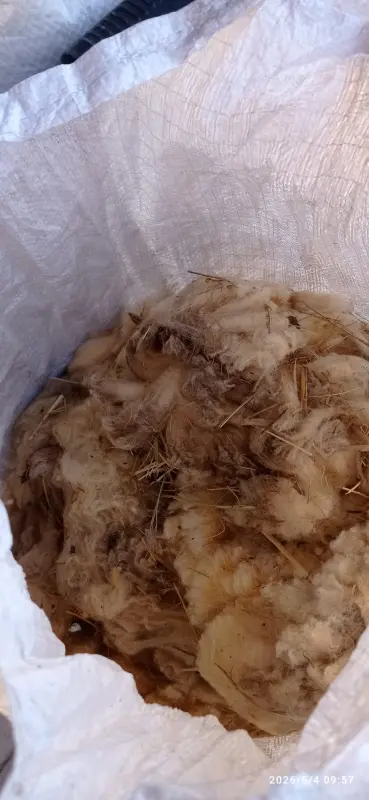
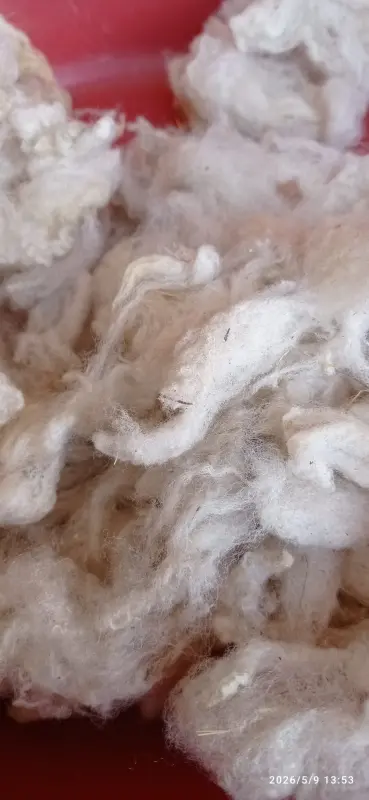
I learned how to wash raw wool from watching videos. For this process, I use a lanolin shampoo and just gently squeeze the wool with my hands.
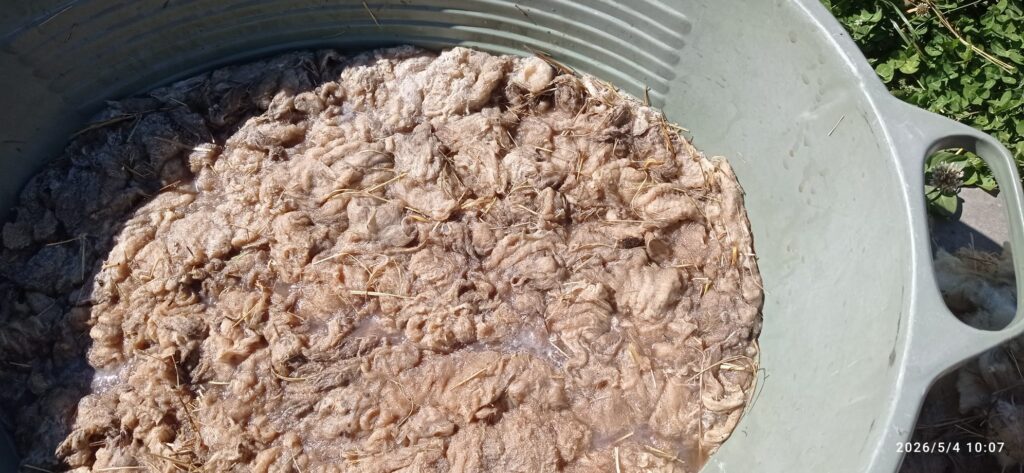
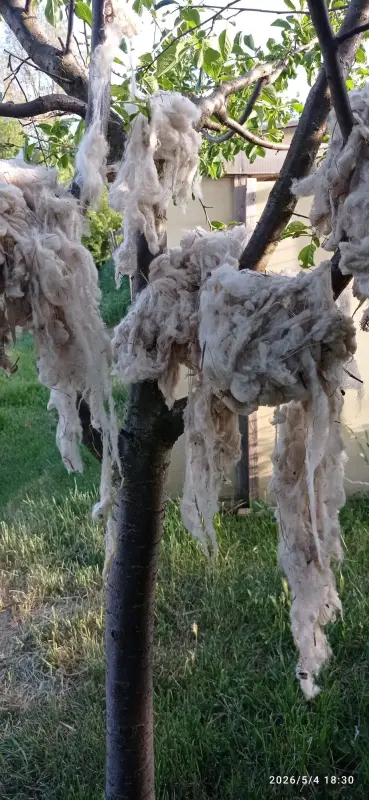
Of course, I wear rubber gloves because there are animal residues in it that could cause an infection if they enter the body through the skin. I also try to pick out the dirty pieces of vegetable matter at this stage. After rinsing it several times, I first put it into a slatted crate to drain. Then, I hang it out on my apricot trees, which are currently dying from monilia blight.
Processing
It takes about one week for a bag of raw wool to dry. I put it out in the morning and bring it in at night. I always use slatted crates so it can breathe.
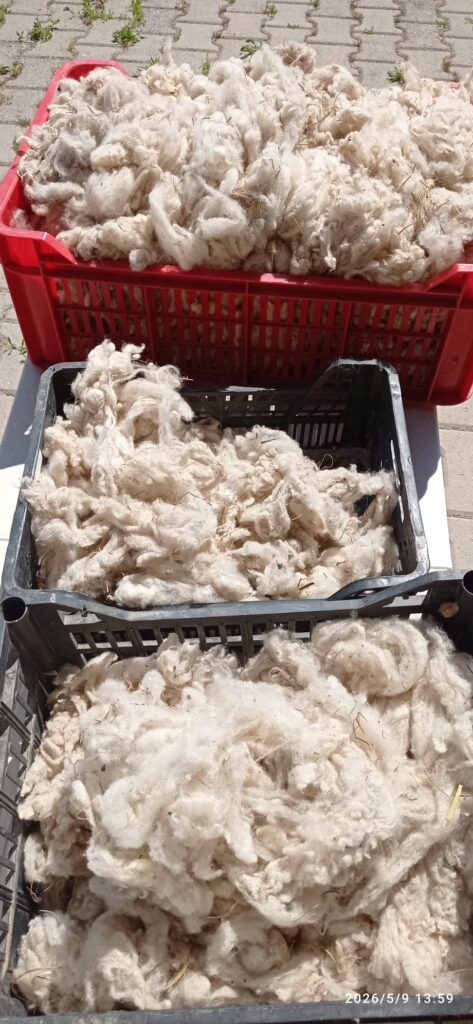
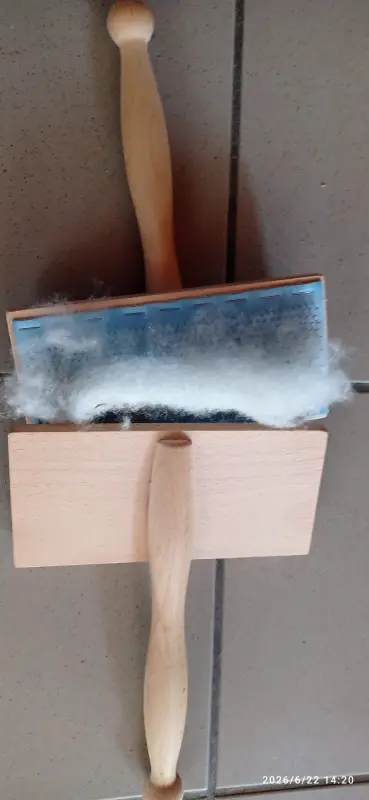
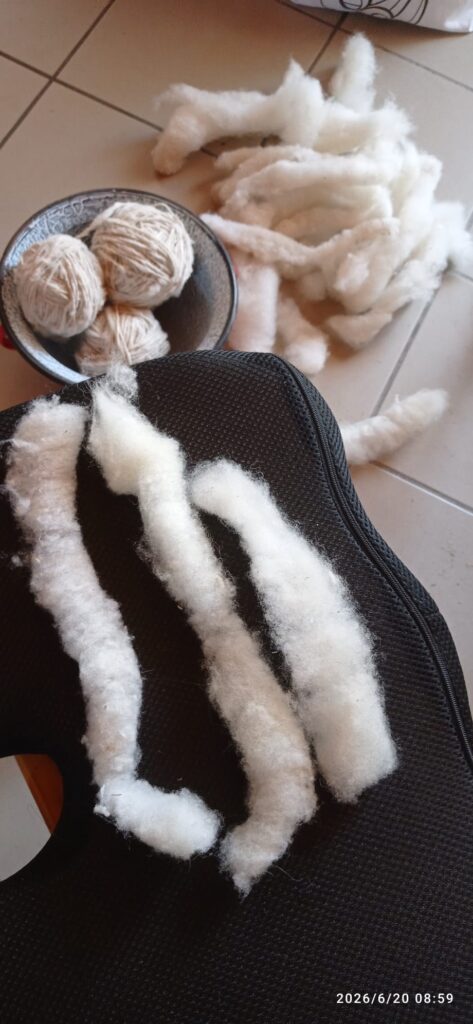
Once it is perfectly dry, I start carding the wool by hand. For this, I have two wide brushes that must be used facing each other.
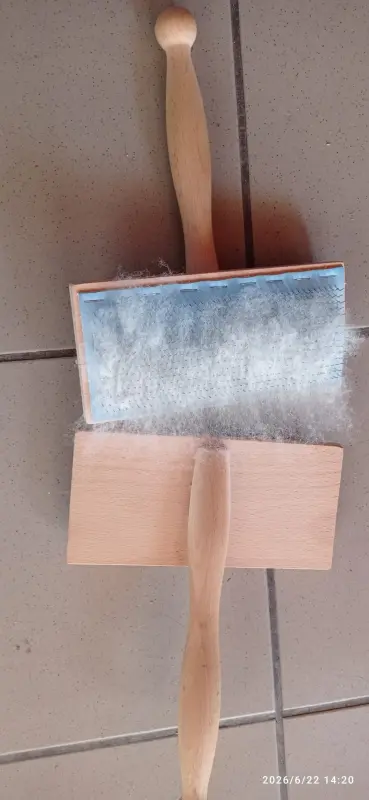
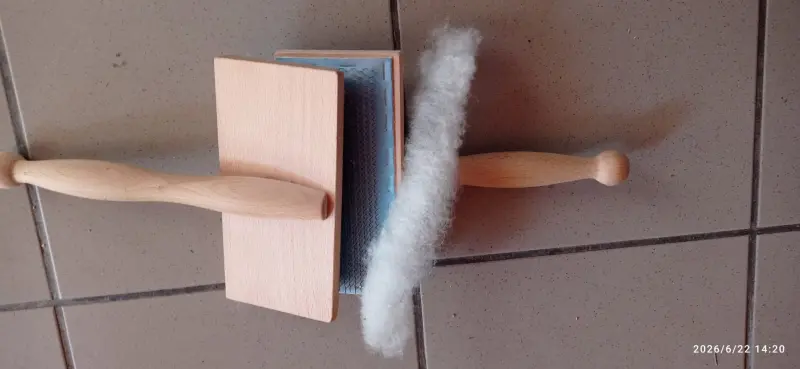
They need to be worked against each other about 4 to 5 times until the wool becomes nice and smooth. It is not easy to understand how they work. It took me weeks of repeatedly watching videos to master this technique. The hardest part is creating the cigar-like shape at the end. I think I practiced that for a year. Now, they look quite nice.
Using wool
I spin the finished wool “rolags” into yarn using a spinning wheel, and then I crochet rugs out of them. Curious about the story of my spinning wheel? Read it here.
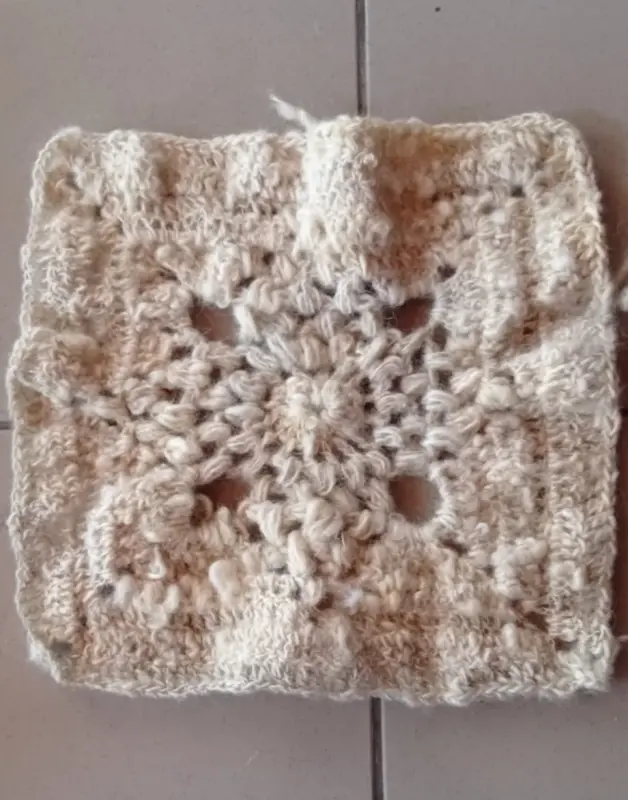
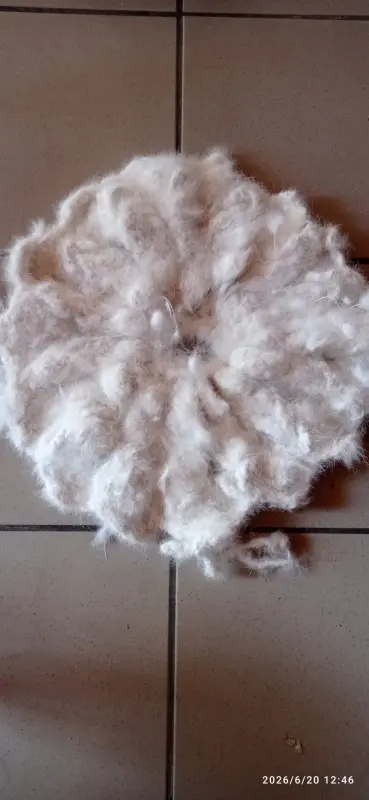
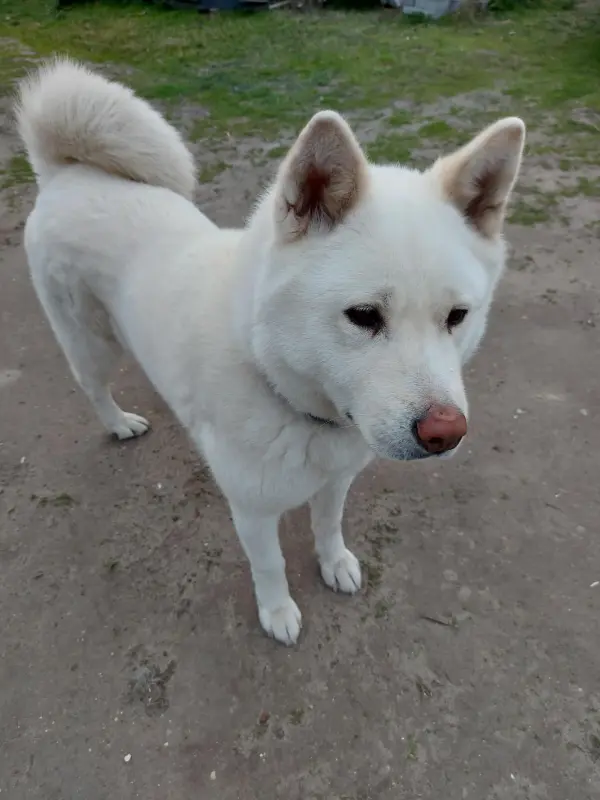
I have tried this process not only with sheep wool but also with dog hair. As it turns out, this has its own specific name: Chiengora.
Forms of Wool
- Raw wool: Uncleaned wool that still contains natural grease, dust, and vegetable matter.
- Washed wool: Cleaned and degreased wool that is now ready for carding.
- Carded wool: A loose roll of wool brushed with hand carders.